We all know the story of Ruth, right?
After the death of her husband, she chose to stay with her
widowed mother-in-law, Naomi, instead of returning home to her family in Moab. She
gleaned the fields of Boaz, a kinsman of Naomi’s husband, at the time of grain
harvest, in order to sustain them (the grain that fell as the reapers gathered
was traditionally left on the ground for the poor to glean).

Because of her faithfulness and the quality of her character,
she drew the attention of Boaz as she gleaned his fields. He instructed his
servants to leave extra grain in the wake of their reaping, so that she could
gather it.
According to the custom of Levirate marriage (levir being Latin for “husband’s brother”),
the nearest kin of a dead man had an obligation to marry the widow, and raise
an heir to his brother’s house. Boaz was a near kin to Naomi’s husband (and
hence, her son’s, as well), and it would be his obligation to marry Ruth, to
fulfill the law.
Persuaded by Naomi, Ruth went to Boaz, as he slept on the
threshing-floor, and lay at his feet while he slept. When he awoke to find her
there, she revealed that he was a near kinsman, which was a marriage proposal
of sorts. In a sweet revelation of his character, Boaz tells Ruth that he is
impressed with her goodness, and that her virtue is well-known. He informs her
that he is willing to do his duty, but that there is a nearer kinsman than he,
and that this other gentleman has first dibs.
Long story longer, Ruth and Boaz marry and Ruth has a son
named Obed. Obed is the father of Jesse, who is the father of David—from whose
line Christ comes.
So Ruth is blessed with a goodly husband, and also becomes
the mother of a line of kings, most importantly, the King of Kings, the Savior.
The example of Ruth encourages us to be faithful, loyal, and
virtuous in a world much like that which Ruth inhabited, where “every man did
that which was right in
his
own
eyes (Judges 17:6).”
If we can live lives fill with faith and integrity, those
around us will notice. As Boaz said of Ruth, “all the city of my people doth
know that thou
art a
virtuous
woman (Ruth 3:11).” Her quiet example was a testament to others of her
goodness.
We, like Ruth, can choose to
have integrity in a world that mocks goodness, and loyalty in a world where an
attitude of self-interest is expected--and even encouraged.
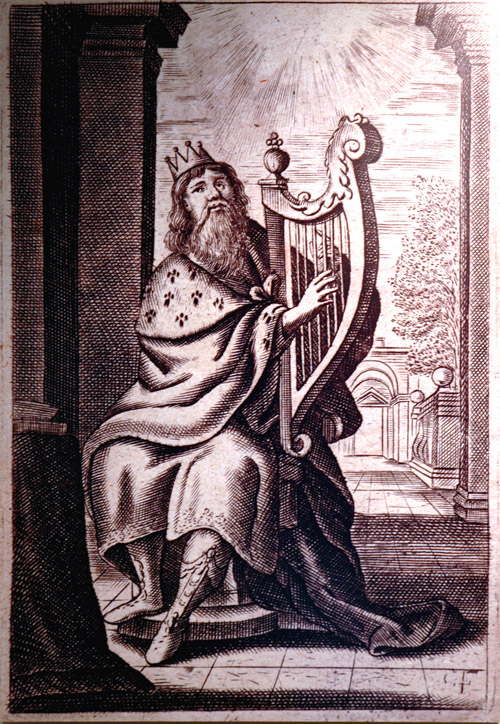 King David’s accomplishments: